How to make a budget on a monthly salary in India
By Siva Sankar · Updated October 2026
Most salaried people in India get paid once a month, and many find the money gone by the 20th. A budget isn't about cutting every pleasure. It's a plan that tells your salary where to go before it arrives. Here is a simple method that works whether you earn ₹20,000 or ₹2,00,000 a month.
Step 1: Know your real in-hand salary
Your CTC is not what reaches your bank. Deductions such as Provident Fund, professional tax, income tax (TDS) and sometimes insurance come out first. Open your last three payslips and note the actual amount credited. If it varies because of incentives or overtime, use the lowest of the three. Budget on the money you can count on, and treat anything extra as a bonus.
Step 2: List fixed costs
These are bills that come every month at roughly the same amount:
- Rent or home-loan EMI
- Other EMIs: bike, car, phone, credit card instalments
- Electricity, gas, water, mobile and internet
- School or tuition fees, ideally split into monthly amounts
- Insurance premiums, ideally split into monthly amounts
- Money sent home to parents or family
Add them up. If fixed costs are already above 50 to 60 percent of your in-hand pay, your budget is under pressure, and the first goal is to bring them down, for example by prepaying a costly loan or moving to a cheaper mobile plan.
Step 3: Pay yourself first
Decide a savings amount and move it out on salary day, before you spend anything. Automate it with a recurring deposit, an SIP or a standing instruction to a separate savings account. Many people start with 10 percent and increase it by a small step each time they get a raise. The exact percentage matters less than the habit of saving first instead of saving whatever is left.
Build an emergency fund before anything else: three to six months of essential expenses, kept somewhere safe and easy to access. It stops a medical bill or job loss from turning into credit card debt.
Step 4: Plan for yearly and festival costs
Indian budgets get broken by expenses that don't come monthly: Diwali or Pongal shopping, weddings, school admissions, vehicle insurance, travel home. List the ones you expect this year, total them and divide by 12. Set that amount aside each month in a separate "sinking fund". When October comes, the Diwali money is already there.
Step 5: Give the rest a job
What's left after fixed costs, savings and sinking funds is your spending money for groceries, fuel, eating out, shopping and entertainment. Split it into a few categories with a limit for each. A simple version:
- Groceries and household
- Transport and fuel
- Food delivery and eating out
- Personal and shopping
- Miscellaneous
One helpful trick is to divide your monthly spending money by four and treat each week as its own small budget. If you overspend in week one, you see it straight away instead of finding out on the 28th.
Step 6: Track for 10 minutes a week
UPI makes spending easy and also makes it invisible. Once a week, open your bank or UPI app history and put each spend into a category. A spreadsheet or a notebook is fine. The goal is to notice patterns, such as ₹4,000 a month on food delivery, and decide whether that's what you really want.
Step 7: Deal with debt deliberately
If you have several loans or credit card balances, list them with interest rates. Two common methods are the avalanche, where you pay extra on the highest-interest debt first and save the most money, and the snowball, where you clear the smallest balance first and get quick wins that keep you motivated. Either works if you stick with it. Credit card debt usually carries very high interest, so it normally comes first.
A sample split (not a rule)
A popular starting point is 50/30/20: about 50 percent for needs, 30 percent for wants and 20 percent for savings and debt repayment. In big cities with high rent, needs often take more, and that's okay. Adjust the numbers until they reflect your life, then review them every few months.
Keep it going
Review your budget on salary day each month. Ask what went over, what can be cut and whether your savings can go up. Small, steady changes beat a perfect plan you abandon in February.
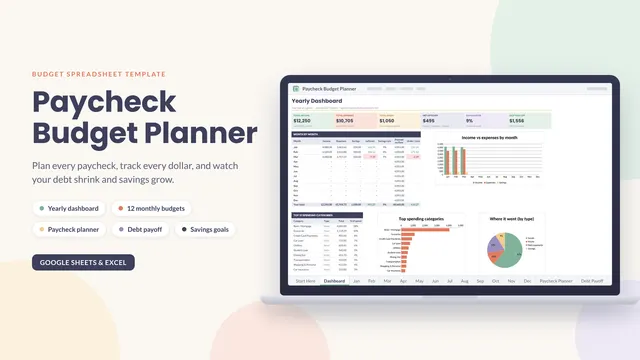
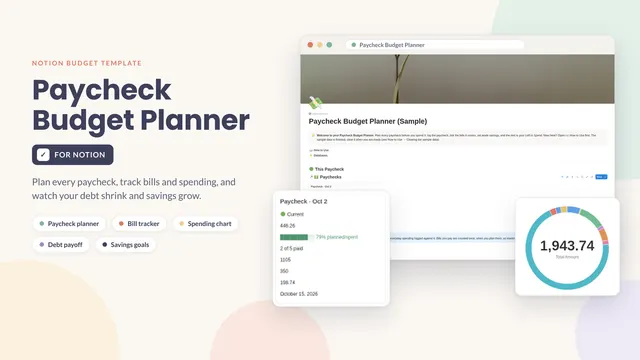
If you'd like a ready-made tool, the Paycheck Budget Planner for Google Sheets and Excel and the Notion version plan each pay period and track debt and savings for you. The 2027 Indian Life Planner includes monthly budget pages with festival dates already marked, so you can plan sinking funds ahead.
This article is general information, not financial advice. For decisions about tax or investments, consult a qualified professional.